How is table QR ordering different from online food delivery?
Table QR ordering begins with a guest at a venue table; delivery ordering begins with a remote customer and adds dispatch. The two workflows have different context, fees and fulfilment steps. Use the checks and definitions below to understand what the evidence supports, and verify changeable details with the venue or current source before relying on them.
The guest context is different
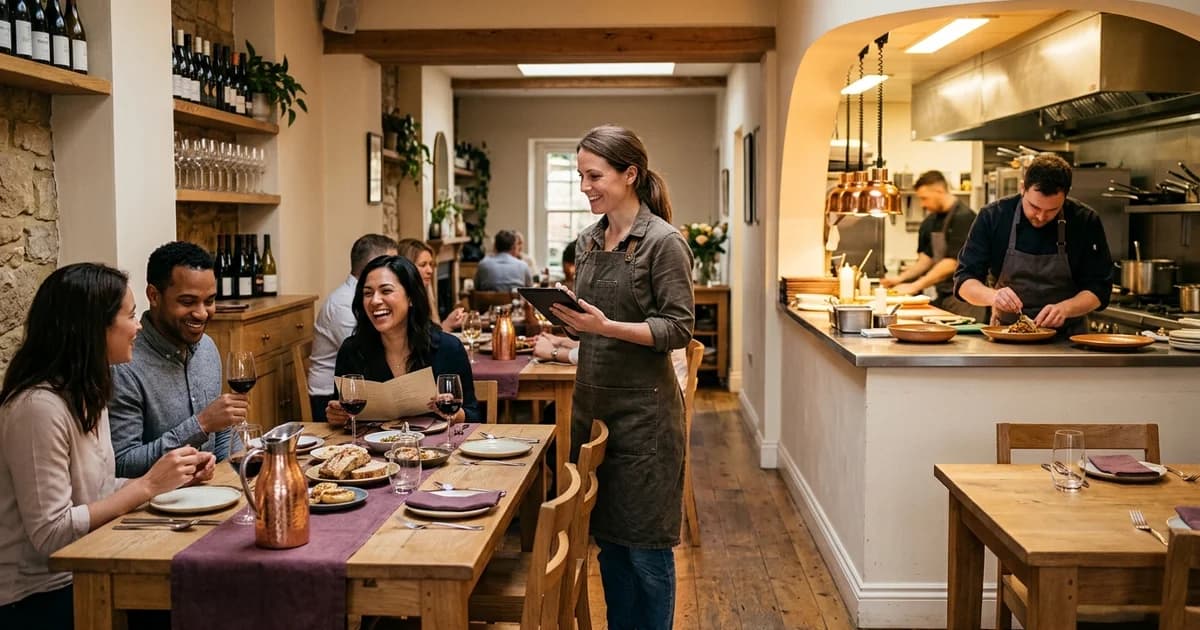
With table QR ordering, a guest scans a code at a physical table and places an order for that visit. The system needs to connect the order to the correct venue, table and service flow. Online delivery starts from a remote address or delivery platform and must associate the order with a customer, delivery destination and dispatch method.
A view-only menu does not perform either type of order submission. A QR code may open a menu page; only a connected ordering system accepts and routes an order. Check what the product actually does instead of using “QR menu” and “QR ordering” interchangeably.
Compare order routing and fulfilment
For table service, staff or the kitchen receive a ticket tagged to the table. Staff may bring the food, manage additional courses and settle payment at the venue. For delivery, the restaurant must prepare the order for packing, coordinate pickup or a courier, and handle delivery status and customer contact.
Both paths need a way to manage unavailable items, modifications, cancellations, duplicate orders and payment status. Delivery also needs a fulfilment address and handoff. Table service needs reliable table context and a process if guests move or codes are misplaced. Map those edge cases before choosing a system.
Compare costs on the same basis
Table ordering may carry software, payment or support costs and can change staff tasks. Delivery may involve platform commissions, delivery charges, promotion costs and packaging. Terms differ by vendor and contract; use the restaurant’s actual statements rather than a published generic rate.
Compare contribution after variable costs: sales less food cost, packaging, payment and platform charges applicable to each channel. Include discounts and refunds consistently. A channel with higher sales can still have different per-order contribution. This comparison is accounting support, not a claim that one channel is always more profitable.
Keep the guest promise accurate
Tell a table guest whether the order goes directly to the kitchen and how staff will confirm it. Tell a delivery customer the delivery provider and current status. Do not display an estimated time unless the workflow has a basis for it.
Test each route separately from menu view to completed order, including payment confirmation and failure handling. For table orders, verify table ID and staff receipt. For delivery, use a test address within the actual service area. Keep a staff-assisted option for guests who do not use QR ordering.
Additional check
For a comparison, run a small operational audit over the same weeks: count order volume, refunds, staff time, packaging, channel charges and guest complaints for each route. Do not attribute every difference to the ordering technology; menu mix, time of day, promotion and demand may also change. Keep assumptions visible.
Related reading
Sources and further reading
- Google Business Profile Help: Local business links
- Google Business Profile Help: Restaurant setup
- NPCI: UPI product overview
Source links support the facts above. Check dated source material for current details.
Keep reading